Extend the Lifespan: The Ultimate Guide to Professional Metal Roofing Coatings
Metal roof coatings play a critical role in extending the service life and resilience of commercial rooftops. These coatings protect against environmental stressors like UV rays and moisture, maintaining optimal functionality for years to come. Knowing the range of options and their particular benefits is fundamentally important. Moreover, understanding correct application procedures and maintenance strategies can profoundly affect overall effectiveness. Still, many building owners fail to account for critical elements when picking coatings, causing preventable financial setbacks. What key aspects should be examined to fully optimize their financial commitment?
What Are Metal Roof Coatings and Why Do You Need Them?
Metal roof coatings act as a protective layer for commercial roof structures, improving durability and lifespan. Such coatings, commonly manufactured from materials like acrylic, silicone, or polyurethane, create a seamless barrier that guards against environmental elements such as moisture, UV rays, and extreme temperatures. By applying a metal roof coating, property owners can substantially minimize the risk of corrosion, rust, and leaks, which can damage the structural integrity of the roof.
In addition, these coatings enhance energy efficiency by reflecting sunlight, thus reducing cooling costs. The installation process is reasonably uncomplicated, usually ensuring minimal disruption to ongoing business activities. Furthermore, metal roof coatings can extend the lifespan of current roofing structures, making them a budget-friendly choice for upkeep. In conclusion, metal roof coatings not only defend but also boost the general performance of commercial roofing installations, making them a critical element for property management and maintenance strategies.
Primary Benefits of Metal Roof Coatings for Enhanced Longevity and Efficiency
Using metal roof coatings offers numerous advantages that significantly improve both longevity and efficiency for commercial properties. One key benefit is the protection against environmental factors, such as rain, wind, and UV radiation, which can cause early degradation. This coating layer serves to extend the longevity of the roofing system, minimizing the necessity for repeated repairs or roof replacements.
Furthermore, metal roof coatings improve energy efficiency by bouncing back sunlight, thereby cutting cooling costs. This sun-deflecting property serves to stabilize a stable indoor temperature, creating a more comfortable environment.
Furthermore, such coatings are capable of minimizing the threat of rust and structural decay, further safeguarding the overall stability of the roofing system. By sealing small leaks and gaps, they improve moisture resistance, guarding against moisture-related deterioration. In summary, the installation of metal roof coatings not only provides lasting protection but also fosters significant energy savings, rendering them a smart investment for owners of commercial properties looking for durability and cost-effective performance.
Finding the Ideal Metal Roof Coating for Durability
Selecting the right metal roof coating is crucial for optimizing durability and effectiveness. Numerous factors shape this selection, including climate conditions, roof slope, and particular building specifications. High-quality coatings, such as silicone, acrylic, or polyurethane, deliver notable advantages. Silicone coatings offer outstanding UV resistance and waterproofing, making them ideal for locations that experience heavy rainfall. Acrylic coatings are recognized for their reflectivity and energy efficiency, which can reduce cooling costs. Polyurethane options deliver exceptional durability and abrasion resistance, well-suited for high-traffic areas.
Moreover, thorough surface preparation is critical for adhesion and prolonged performance. One should select coatings with a demonstrated history of success in commercial applications. Confirming compatibility with the existing roofing system will also prolong the durability of the roof. When all factors are considered, the optimal selection will address specific environmental factors and performance criteria, guaranteeing a long-lasting, detailed resource economical solution for commercial metal roofing systems.
Metal Roof Coating Comparisons: Finding the Best Fit for Your Needs
When selecting a metal roof coating, it is essential to understand the distinct advantages of acrylic and silicone options. Acrylic coatings stand out for their budget-friendly nature and simple application process, while silicone coatings offer superior durability and resistance to moisture. Considering these features can guide you in finding the ideal solution for your specific roofing demands.
Advantages of Acrylic Coatings
Acrylic coatings deliver a variety of benefits that position them as a preferred option for commercial metal roofing systems. One significant benefit is their superior UV protection, which helps maintain the roof's durability and aesthetics over time. These water-based coatings are, ensuring they are environmentally responsible and straightforward to apply. Additionally, acrylic coatings are exceptionally flexible, allowing them to expand and contract with temperature fluctuations without splitting. Their budget-friendly nature also adds to their attractiveness, delivering solid protection without exceeding budget constraints. Moreover, acrylic coatings are accessible in multiple color options, permitting building owners to boost visual appeal while ensuring functional performance. In summary, these characteristics make acrylic coatings an excellent choice for property owners looking for long-lasting and effective metal roofing options.
Benefits of Silicone Coatings
A wide range of advantages make silicone coatings an ideal solution for metal roofs on commercial buildings. Such coatings deliver superior resistance to ultraviolet radiation and harsh weather, improving the durability of the roof. The flexibility of these coatings enables effective expansion and contraction, decreasing the chances of surface cracking. Furthermore, silicone coatings are extremely reflective, promoting energy efficiency by reducing cooling costs. They additionally provide excellent adhesion properties, ensuring a secure bond with the metal surface. In addition, silicone coatings are highly resistant to mold and mildew growth, which contributes to better indoor air quality. Routine maintenance becomes straightforward, as they are simple to clean and reapply. Overall, silicone coatings offer a durable and cost-effective solution for safeguarding commercial metal roofs from the elements.
Steps for Applying Roof Coatings
Applying roof coatings involves several critical steps to ensure durability and effectiveness. Initially, proper surface preparation is essential to ensure optimal bonding, followed by targeted application procedures that maximize coverage. To complete the process, understanding the curing and drying process is crucial for extending the life of the coating.
Surface Preparation Basics
Thorough substrate preparation is vital for the proper application of roof coatings. The process starts with a detailed inspection to locate any rust, damage, or debris on the metal roof. Cleaning the surface is critical; employing a pressure washer or suitable cleaning solution clears away grease, dirt, and existing coatings that may affect adhesion. When cleaning is complete, the roof should be permitted to dry fully. Next, handling any areas of rust with a suitable rust-inhibiting primer works to prevent ongoing deterioration. Furthermore, seam and flashing repairs should be performed to guarantee a even surface. To conclude, confirming that the surface is free from moisture and contaminants will enhance the longevity and effectiveness of the applied roof coatings.
Summary of Application Techniques
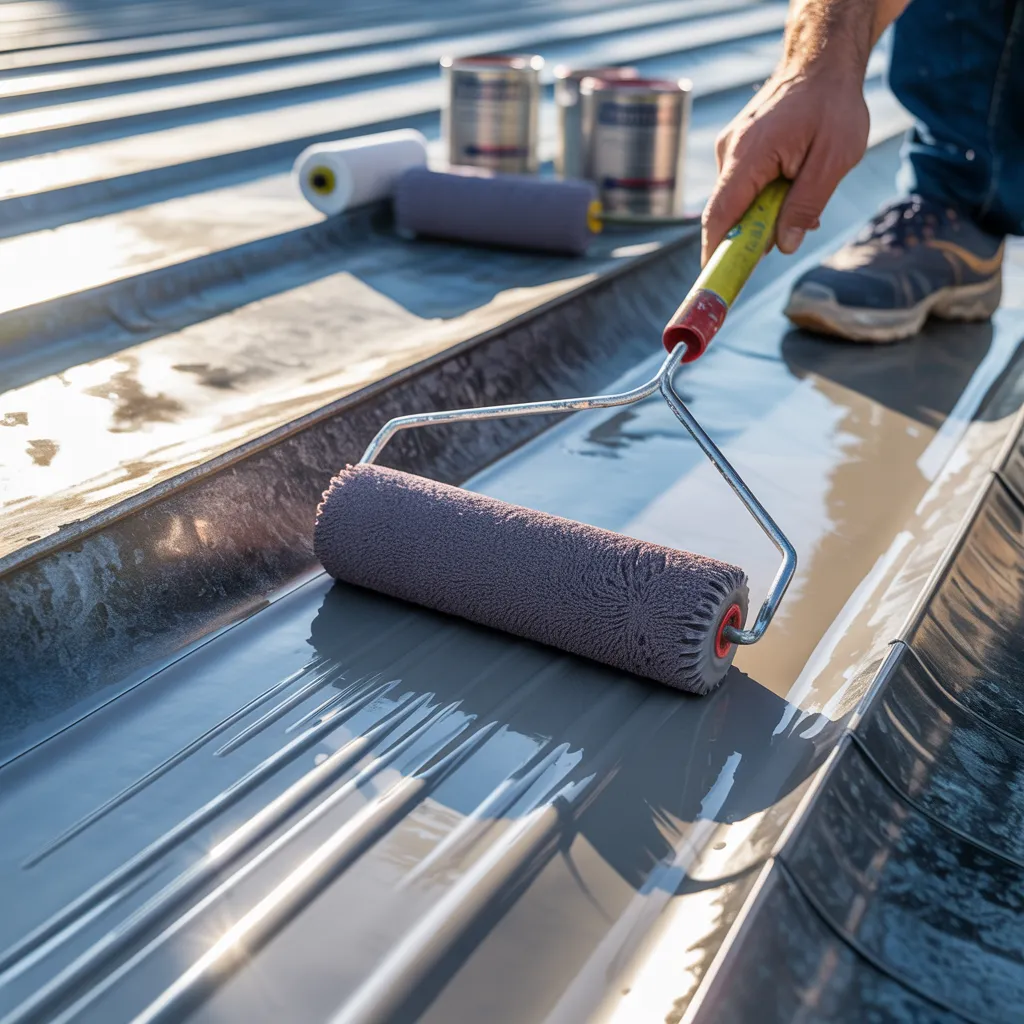
Correctly carrying out the application of roof coatings requires a systematic approach to guarantee peak performance and longevity. Initially, verify that the surface is free of contaminants, clean, and dry, as this enhances adhesion. Following this, select the appropriate coating type based on the metal roof's particular needs. It is advisable to apply a primer when needed, enhancing the bonding performance. When administering the coating, use even strokes with a roller, brush, or sprayer, guaranteeing uniform coverage. Give particular focus to seams and edges, where leaks are likely to occur. Multiple thin coats are generally recommended over a single thick coat, as they promote superior bonding and curing. Lastly, verify that all safety protocols are adhered to throughout the entire application.
Curing and Drying Procedure
Curing and drying are critical phases in the application of roof coatings, influencing both performance and durability. Throughout the curing stage, chemical reactions take place that bind the coating to the substrate, enhancing adhesion and resistance to environmental factors. This step commonly necessitates proper temperature and humidity levels, which must be carefully tracked to ensure adequate curing.
Drying, on the other hand, refers to solvent evaporation, which enables the coating to solidify. Factors such as air circulation, thickness of application, and ambient conditions can considerably impact drying time. Avoiding foot traffic and moisture exposure during both stages is vital to preventing defects. Following manufacturer guidelines assures the longevity and effectiveness of the roof coating.
How to Extend the Lifespan of Your Metal Roof Coating
Preserving a metal roof coating is essential for optimizing its longevity and effectiveness. Consistent inspections serve a critical purpose; homeowners should check for indicators of deterioration, such as cracking, peeling, or fading. Cleaning the surface periodically helps prevent the buildup of dirt and debris, which can hold moisture and result in corrosion. Applying a soft brush or gentle pressure wash with a mild detergent is suggested for effective cleaning without damaging the coating.
Moreover, maintaining adequate drainage is vital. Obstructed gutters and downspouts can result in standing water, elevating the likelihood of rust and decay. Handling minor issues without delay, including patching minor cracks or refreshing protective coatings, can prevent further damage. Finally, arranging expert evaluations periodically can help identify potential issues early, allowing for timely interventions that extend the life of the metal roof coating. Regular maintenance ultimately enhances durability and protects the investment.
Steer Clear of These Frequent Errors When Selecting Metal Roof Coatings
When choosing a metal roof coating, what errors should property owners be aware of? A frequent error is failing to evaluate the individual demands of their roofing system. Distinct surroundings and materials demand specialized solutions; a one-size-fits-all approach may lead to premature failure. Additionally, overlooking manufacturer warranties can result in unexpected costs if the coating fails to deliver on its claims.
Another common mistake is placing cost above quality. Cheaper coatings may offer initial savings but can lead to more significant expenses in repairs and replacements down the line. Homeowners and building owners should also be cautious about attempting DIY applications without sufficient knowledge, which can compromise the coating's effectiveness.
Finally, failing to consult with professionals can lead to poor product selection. Working with skilled contractors ensures the appropriate coating is selected and installed properly, ultimately maximizing the roof's longevity and performance.
Common Questions and Answers
How Frequently Should Metal Roof Coatings Be Reapplied?
Generally, metal roof coatings ought to be reapplied every five to ten years, depending on environmental conditions and wear patterns. Periodic inspections can be useful in establishing the right time for applying a new coat to sustain peak protection and performance.
Can Metal Roof Coatings Be Applied in the Winter?
Applying metal roof coatings in winter is usually discouraged. Frigid conditions can impede the adhesion and curing process, possibly causing poor performance. It is recommended to wait for more favorable temperatures to secure ideal results and performance.
Are There Eco-Friendly Metal Roof Coating Options?
Indeed, there are eco-friendly metal roof coating solutions available. These products typically feature water-based formulations, recycled materials, and low volatile organic compounds (VOCs), supporting sustainability while offering strong protection and exceptional durability for metal roofing applications.
What Are the Average Costs of Metal Roof Coatings?
The standard cost of metal roof coating products generally falls from $1.50 to $3.50 for each square foot, according to the coating type selected and the particular needs of the project, including prep work and application procedures.
Can Metal Roof Coatings Impact My Roof Warranty?
Coatings applied to metal roofs could potentially invalidate an existing roof warranty should the manufacturer prohibit such applications. It becomes necessary to examine the warranty conditions and consult with the product manufacturer before the application of any coatings to make certain coverage is preserved.